Lane rates and freight cost
Freight cost per ton on every lane, and the day a rate changed.
A rate increase rarely arrives as a letter. It arrives as an invoice that is twenty dollars more than last week's, on a lane nobody was watching. Loadoc works out freight cost per ton for every lane (one pickup to one delivery), keeps the lane's usual rate, and says when a bill departs from it.
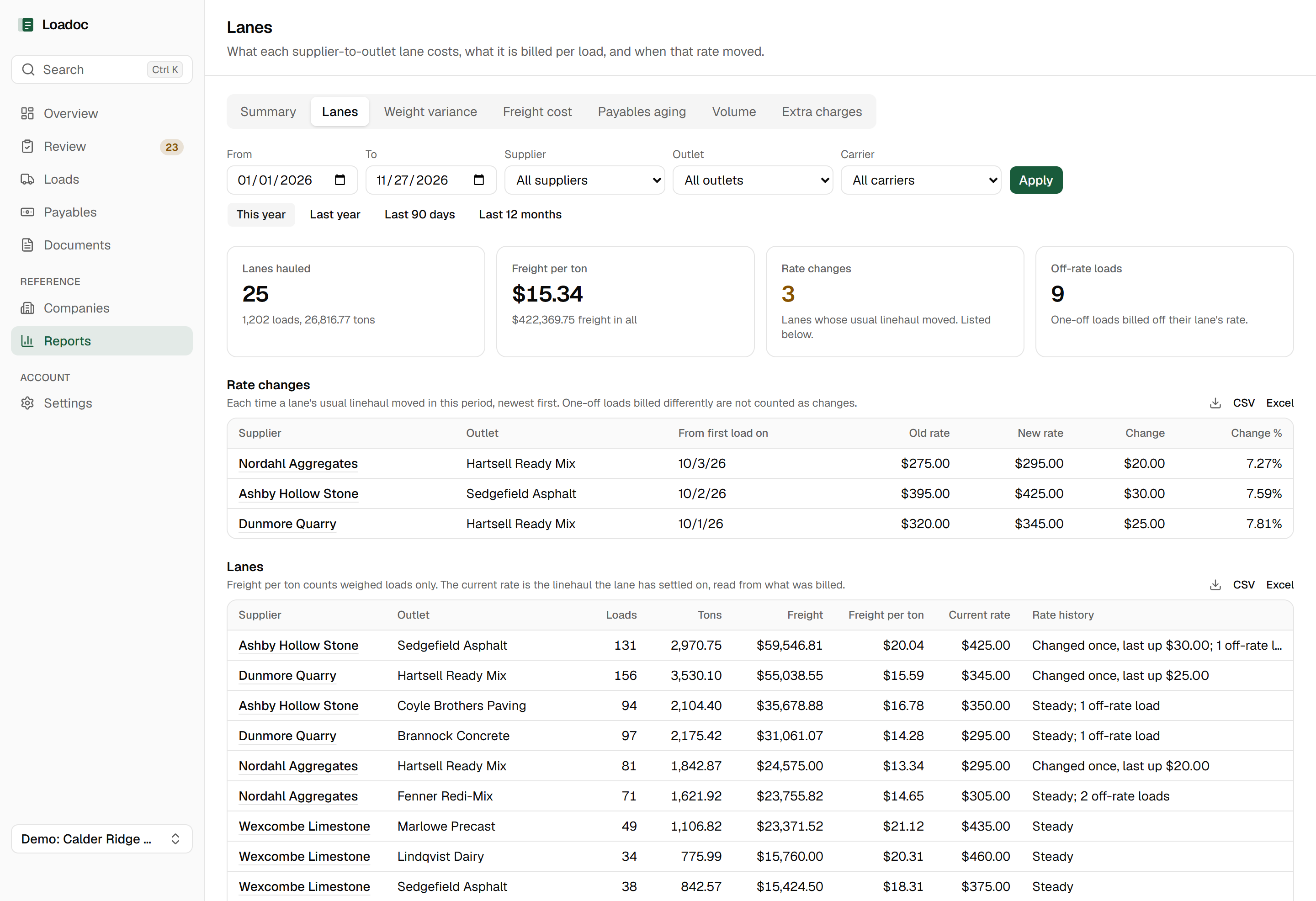
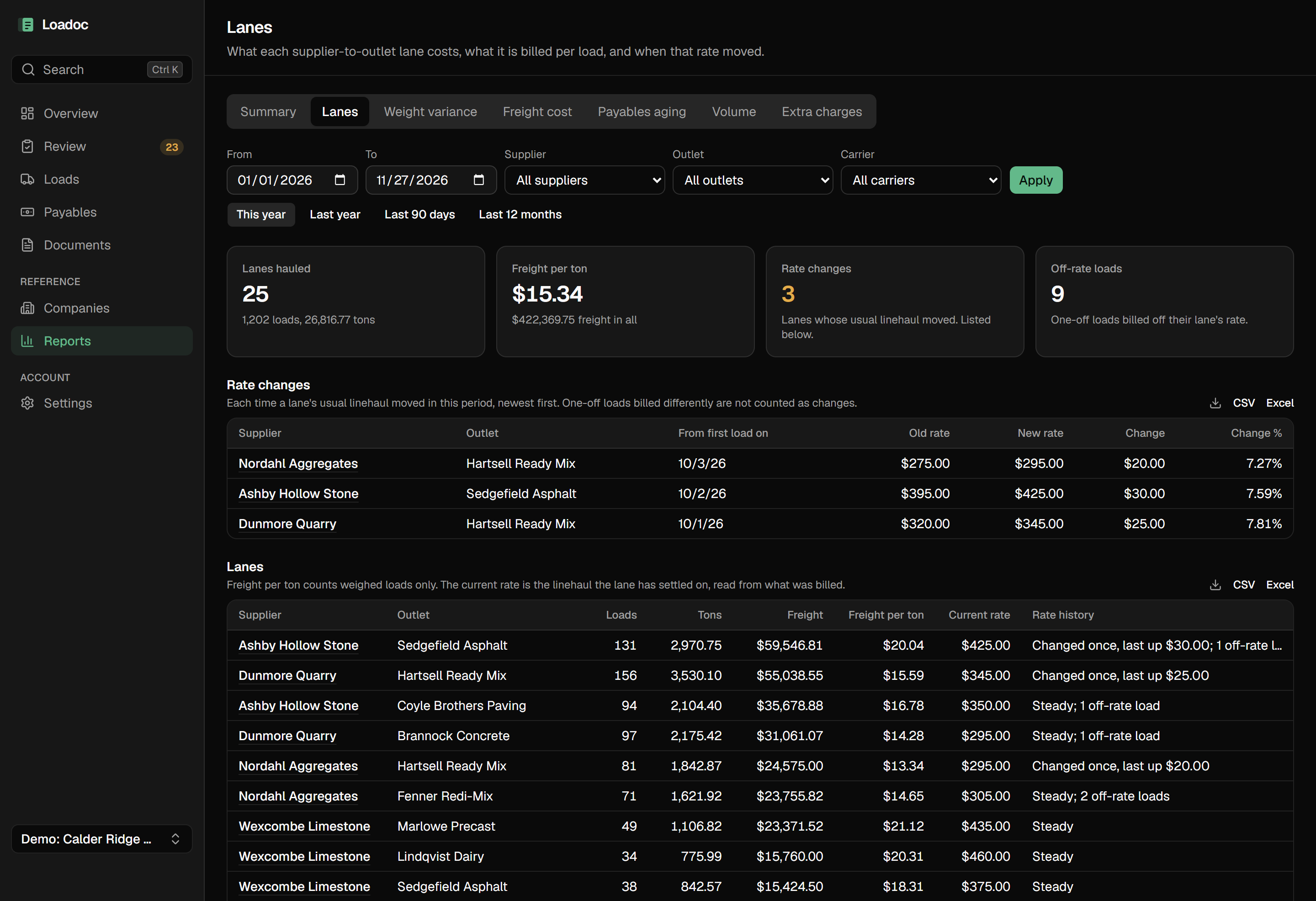
Rate changes
Old rate, new rate, and the first load it applied to
That is the whole conversation with the hauler, on one line: this lane was $275.00 until 3 October and has been $295.00 since.
Our first customer found an increase this way that nobody in the office had been told about.


One lane
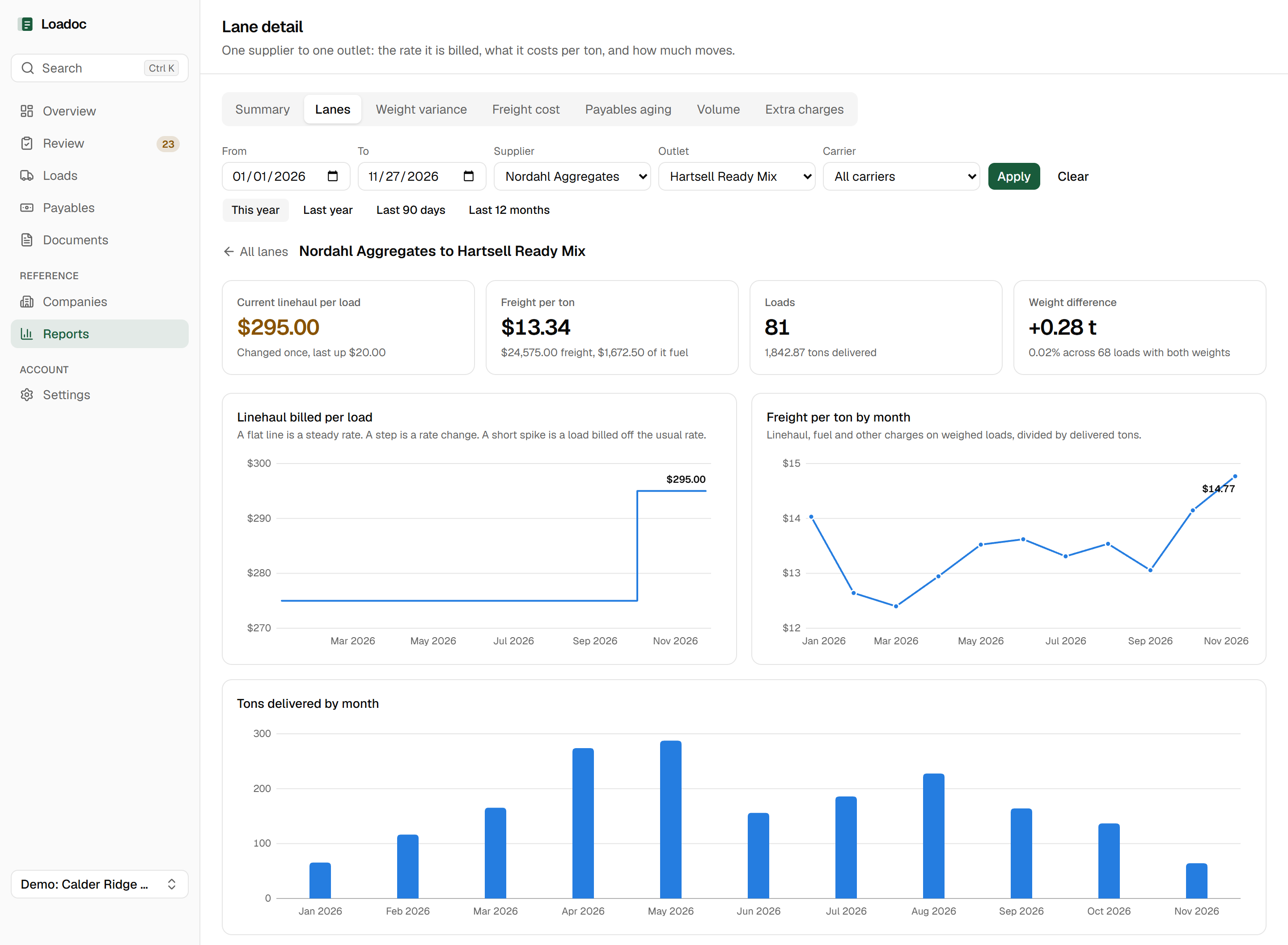
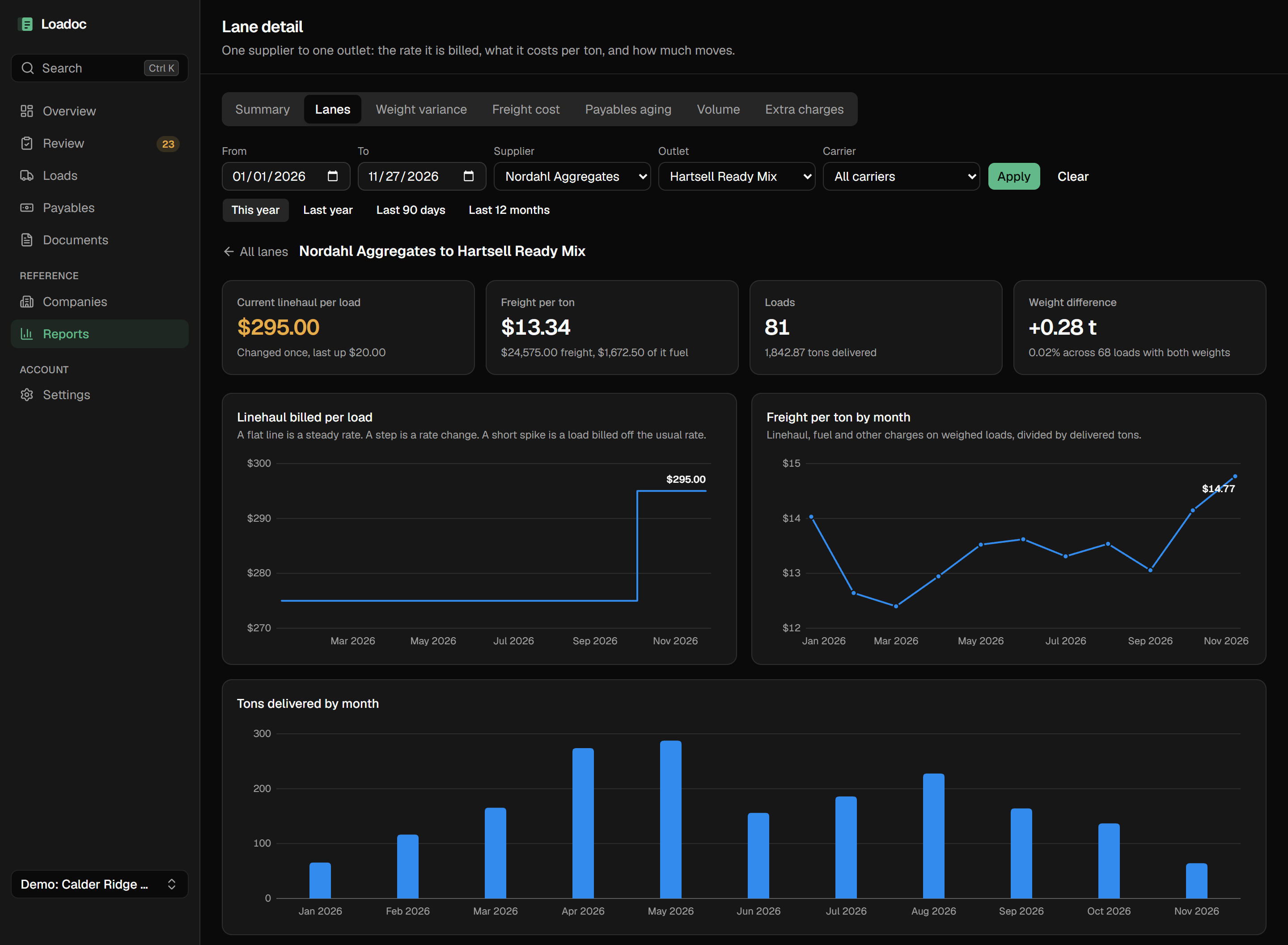
A flat line, then a step
Open any lane for its history: what it is billed per load, what a ton costs to move on it, how much has moved, and how the supplier's weight compares with the delivered weight.
A short spike in the chart is one load billed off the usual rate. A step is a change.
Freight cost
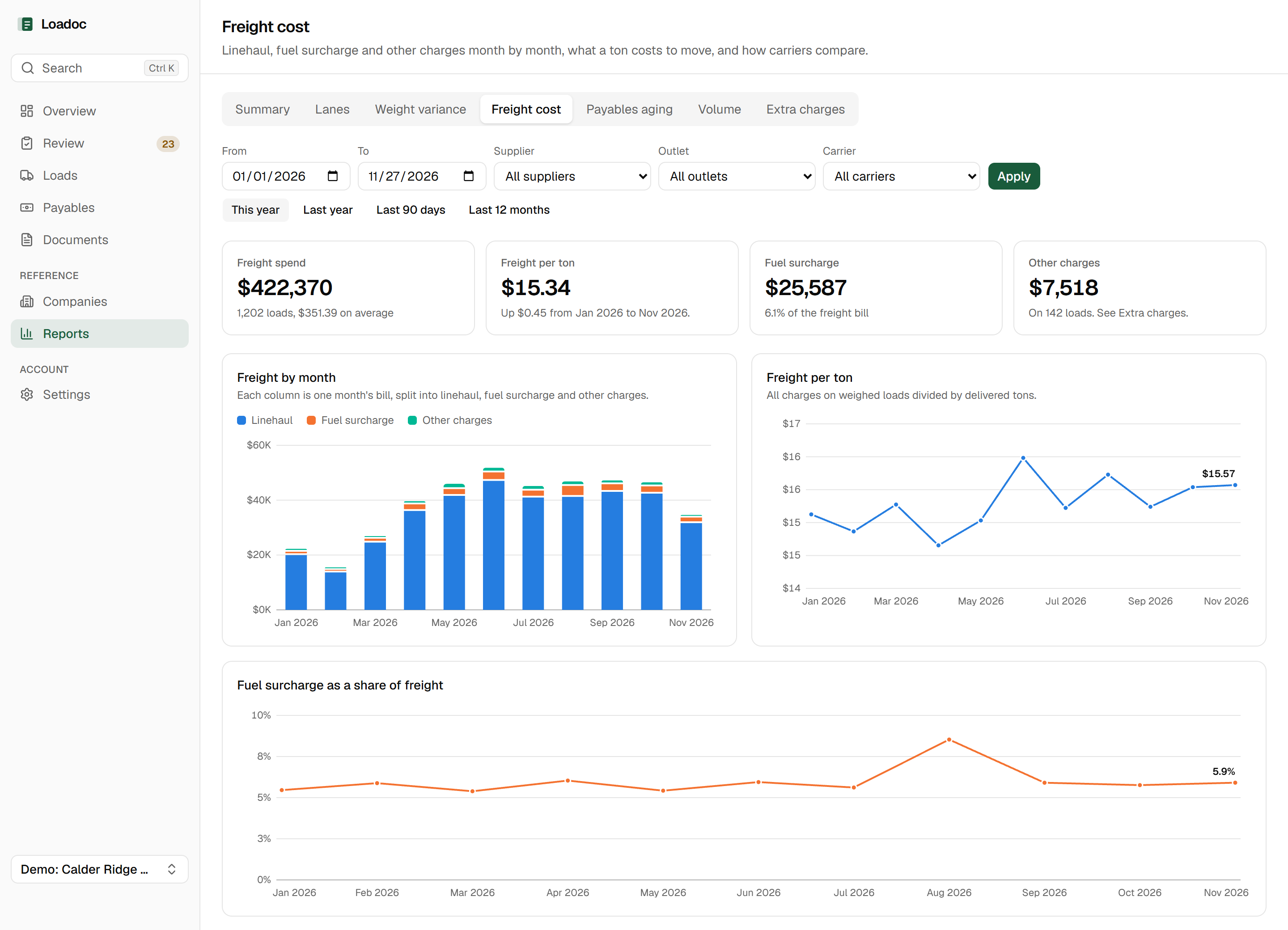
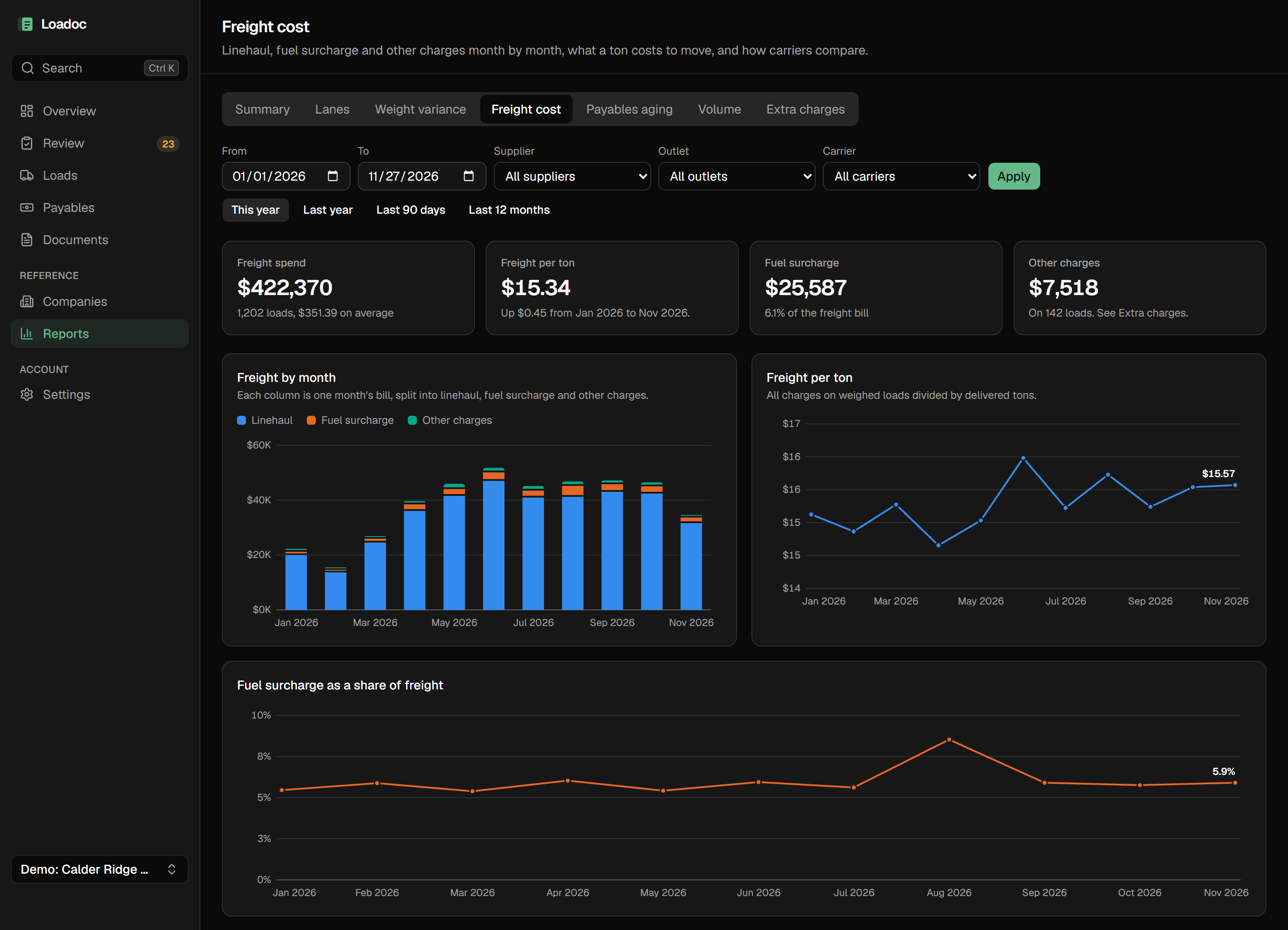
What a ton costs to move, and how much of it is fuel
Freight is split into linehaul, fuel surcharge and other charges, by month and by hauler. Freight per ton counts only loads that were weighed, so a flat-rate haul with no ticket does not distort it.
No agency sets or checks fuel surcharges. The formula is between you and the hauler, and the only check on it is someone looking. This is the chart to look at. How to test one invoice's surcharge against your schedule is in the carrier invoice audit checklist.
Every table downloads as CSV or Excel.
What it does not do
It does not hold your contract rates. The usual rate is learned from invoices. If a hauler has overbilled a lane from the first load, Loadoc will take that figure as usual.
It does not flag every per-ton invoice. A lane where the linehaul differs on every load is reported as freight per ton, not judged load by load.
It does not benchmark you against the market. It compares each lane with its own history.
Questions
- What is a lane here?
- One pickup company to one delivery company: a quarry to a plant, a sawmill to a pellet mill. Loadoc builds the list of lanes from the invoices themselves.
- How does it know a lane's usual rate?
- From what has been billed. When a lane has been invoiced the same linehaul load after load, that figure is its usual rate. Nothing is set up by hand and there is no rate table to maintain.
- What is the difference between a rate change and an off-rate load?
- A rate change is the usual figure moving and staying moved: every load from a certain day is billed at the new rate. An off-rate load is a single invoice billed at a different figure while the lane's usual rate stays where it was. The first is an increase, the second is more often a billing slip.
- My haulers bill by the ton, so every load is a different amount. Does this still work?
- Partly. Freight per ton is worked out for every lane however it is billed, so you can still see a lane getting dearer over time. The load-by-load flag needs a lane that is billed a steady linehaul; where the amount differs on every load, Loadoc does not try to judge a single invoice against a usual figure. On per-ton lines it does check that tons times rate gives the charge.
- Does an off-rate load go to review?
- No. It is a note on the load and a count on the overview page. The paperwork can be perfectly consistent and still be at a new price, so it is something to ask the hauler about, not a failed check.
- Does it check the fuel surcharge against the diesel price?
- No. Fuel surcharges are set between you and each hauler, and Loadoc does not hold your schedule. It shows fuel as a share of freight by month and by hauler, which is where a jump stands out.
Weight is the other half of cost per ton. See scale ticket reconciliation for how the two tickets on a load are compared, and why two truck scales disagree for which weight to divide by.
The rest of the job
- Scale ticket reconciliationTicket numbers, gross, tare and net, and the supplier's weight against the delivered weight.
- Freight invoice auditCharges that do not add up, a rate above the confirmation, and invoices sent twice.
- Carrier payablesWhat you owe each hauler and when, the weekly payment, and the remittance that goes with it.
Run last month's freight bills through it
Connect the inbox your haulers bill, or drop in the PDFs you already have. The first batch shows which loads pass and which get set aside, and why.
14 days, up to 400 loads. Already have an account? Sign in