Aggregates
Stone, sand and gravel: the hauler's invoice against the scale ticket.
If you buy stone delivered, or broker hauls between quarries and plants, every load comes back as a hauler's invoice with a ticket from somebody else's scale. Loadoc reads both and checks one against the other before the hauler is paid.
Fit
Who in aggregates this is for, and who it is not
It fits a haul broker, or a contractor or ready-mix producer buying material hauled by outside trucks, where the hauler is paid by the ton or a flat rate per load and sends an invoice for each load with its ticket attached.
It does not fit a producer who runs the scale, a fleet paying its own drivers, work billed by the hour, or haulers who put a week of tickets on one invoice.
We would sooner you found that out here than on day ten of a trial.
Tickets
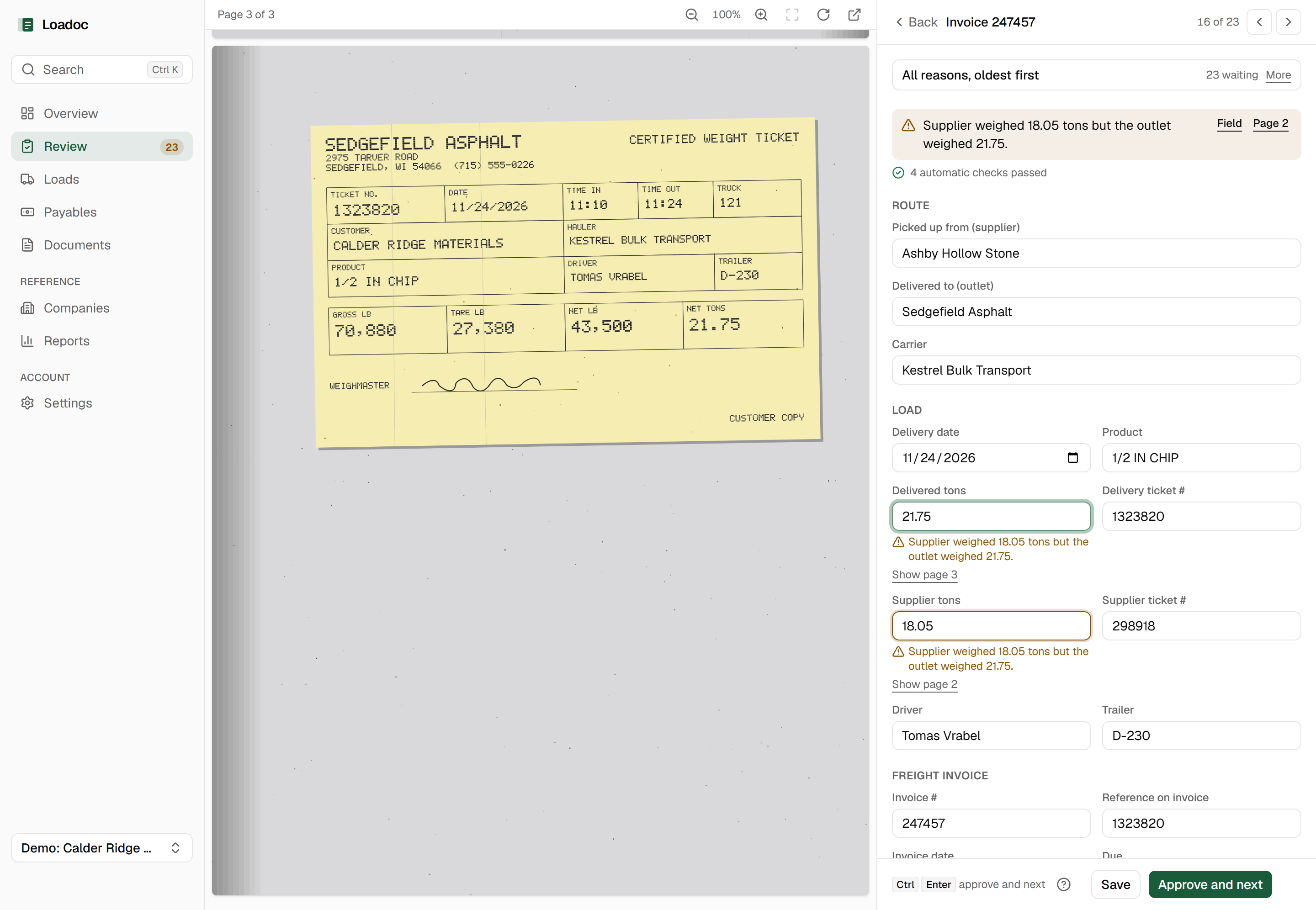
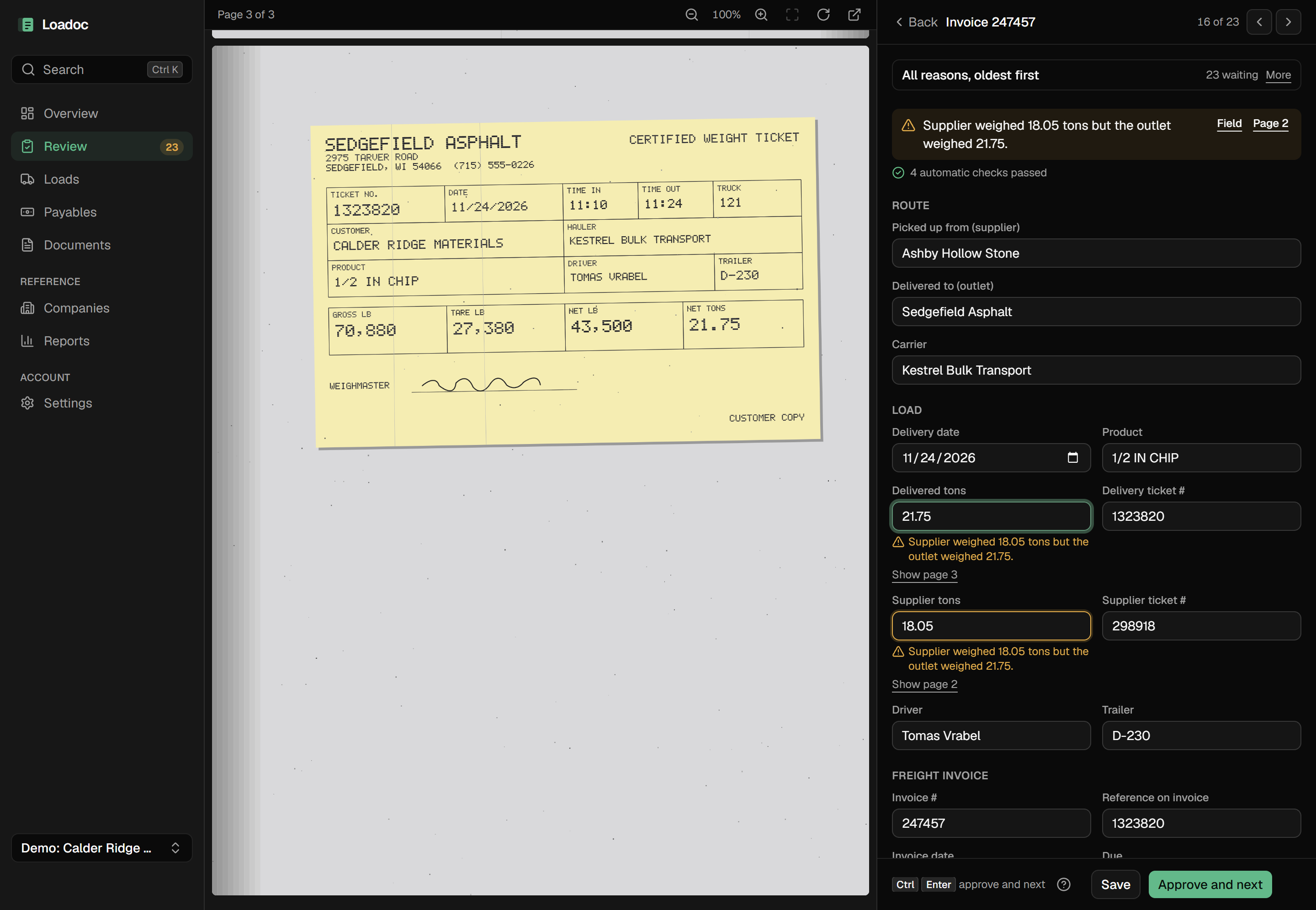
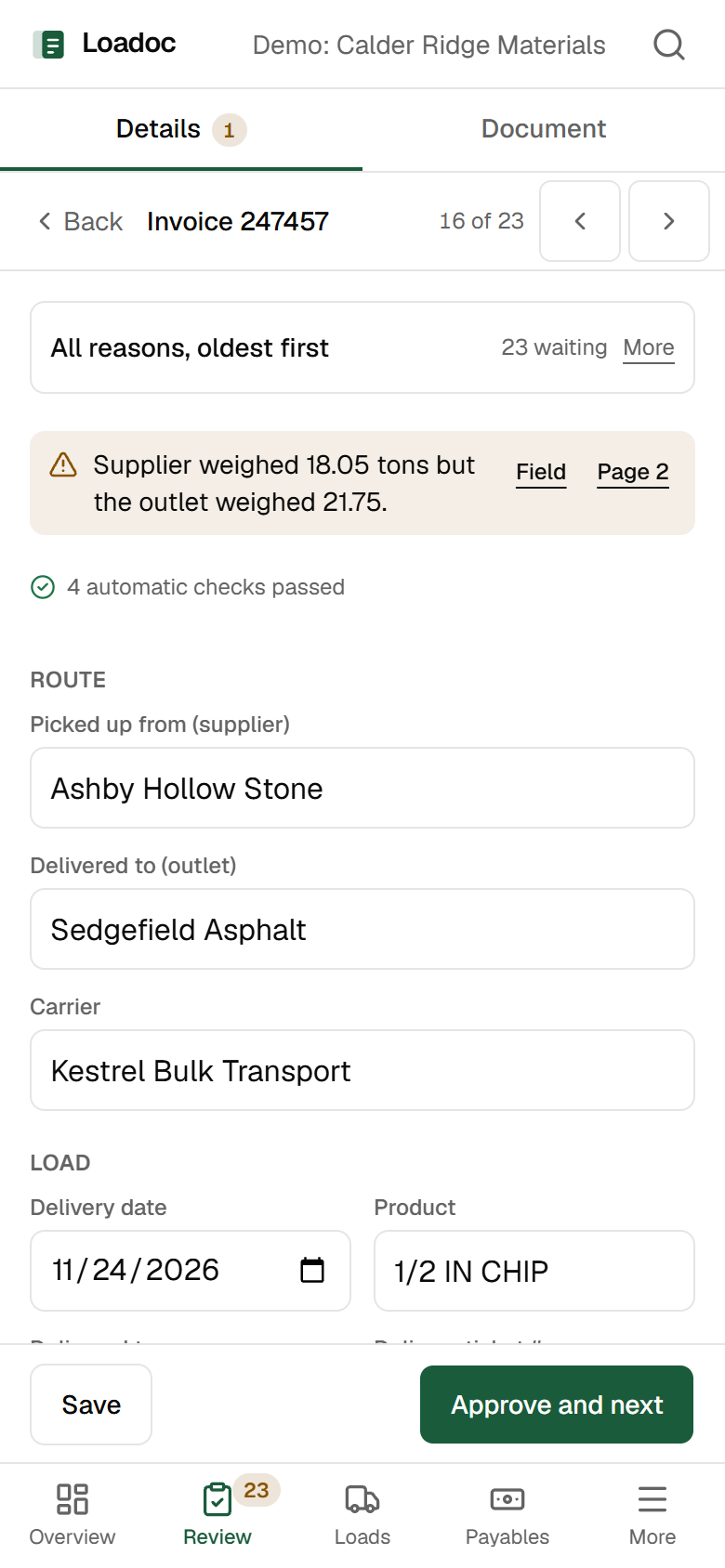
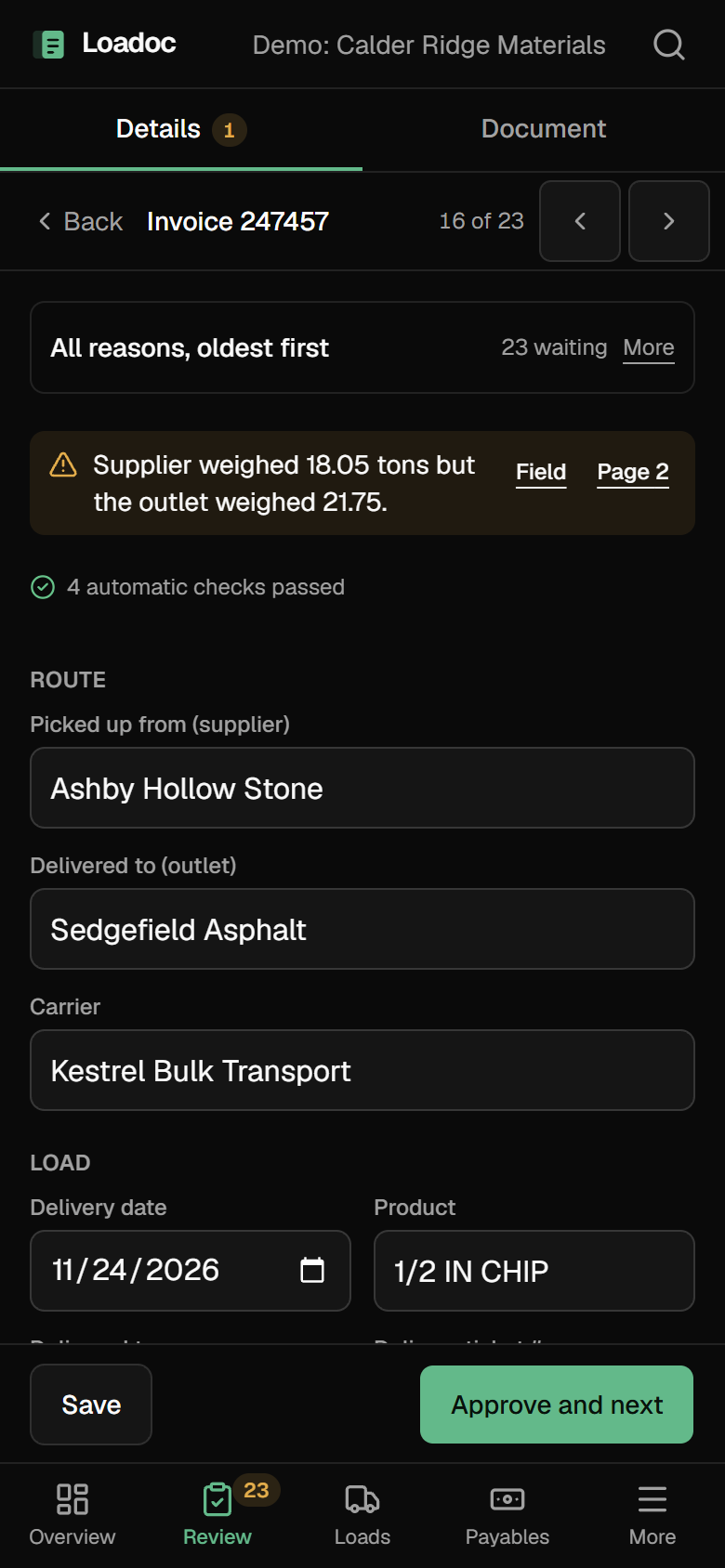
The quarry's ticket and the plant's ticket, on the same load
When both tickets are in the PDF, Loadoc compares them. It also checks that gross minus tare equals net on each, that the ticket number is the one the invoice was billed against, and that the ticket is dated within a few days of the haul.
Over a season the report adds up the difference by quarry, which is how a scale that reads heavy on every load comes to light.
Rates and extras
Stand-by time, fuel, and the lane that went up
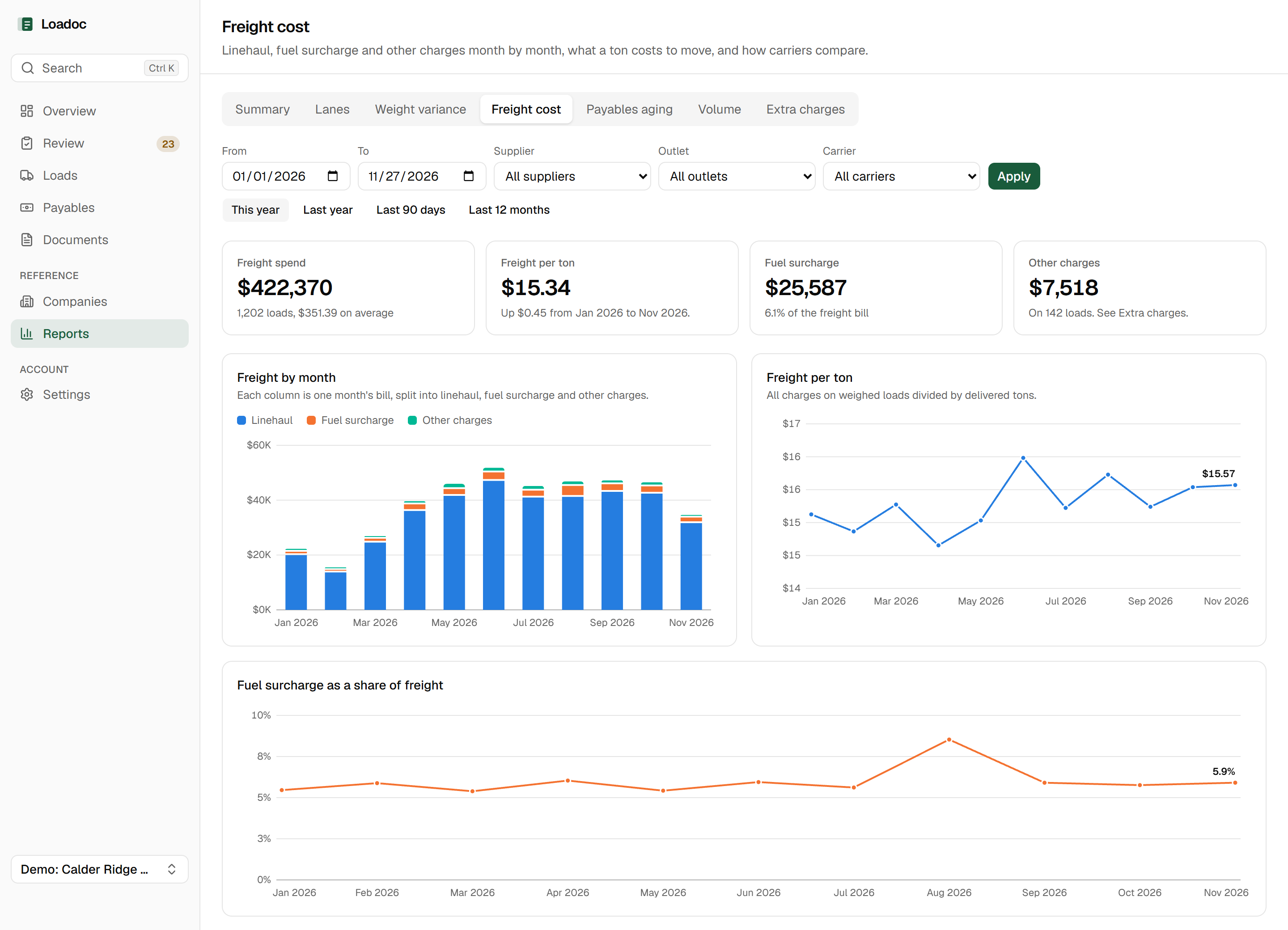
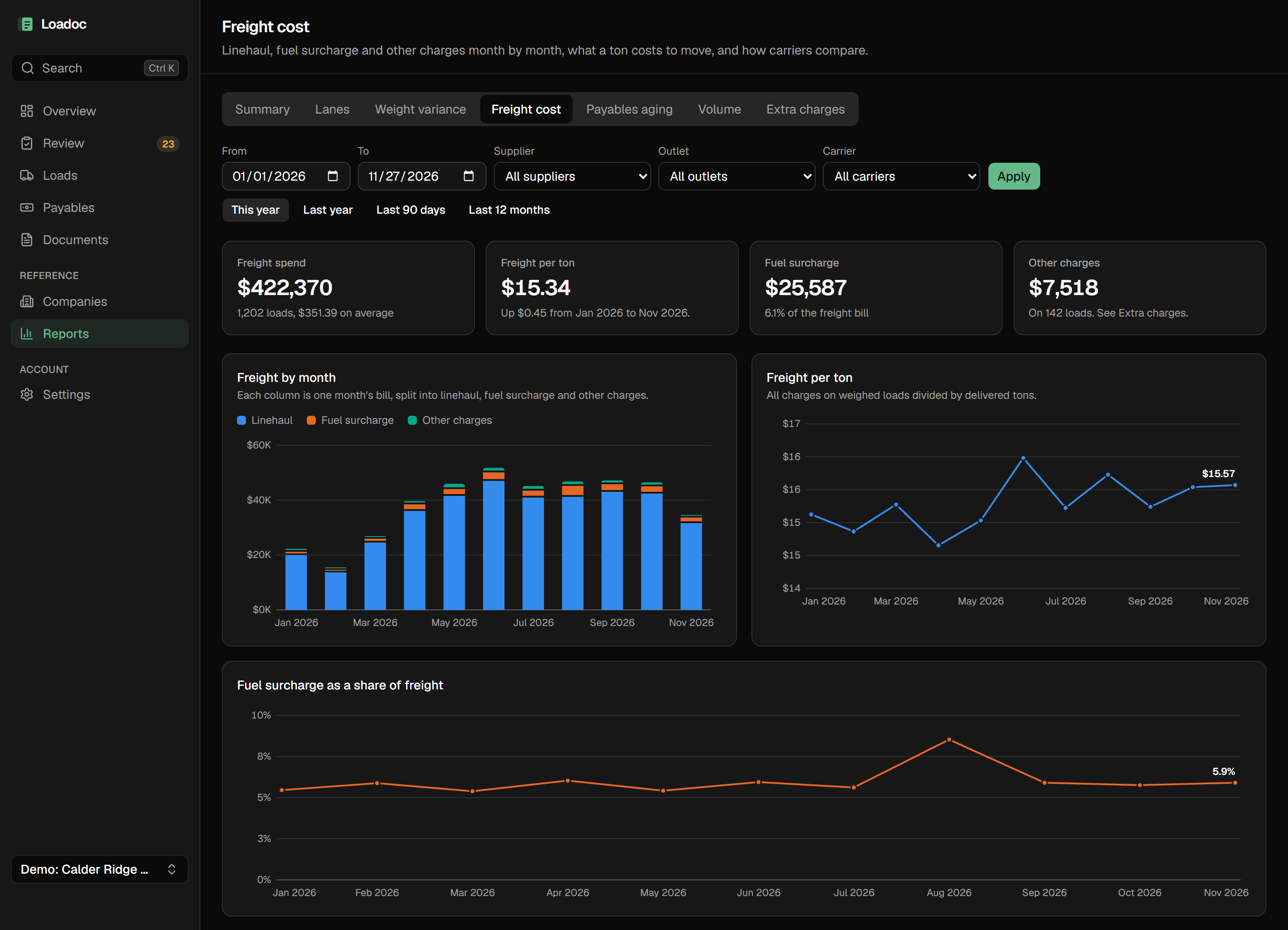
Detention and stand-by are kept apart from linehaul, so the plant that keeps trucks waiting shows up as a cost on its lane. Fuel is tracked as a share of freight. A lane billed at a new rate is listed with the date it changed.
Before you start a trial
One invoice, one load. Multi-ticket invoices are not split.
No dispatch, no driver app, no e-ticketing. Loadoc starts when the invoice arrives.
No job costing. Loads are grouped by supplier, destination, lane and hauler, not by job or cost code.
Questions
- My haulers send one invoice a week with forty tickets on it. Will that work?
- Not today. Loadoc reads one invoice as one load. An invoice with a stack of tickets behind it becomes a single load and is sent to review. It fits haulers who invoice load by load, with the ticket for that load attached.
- Most of my trucking is billed by the hour. Is there any point?
- Less. The invoice arithmetic, the duplicate check and the payables still apply, but the weight checks are what set Loadoc apart, and an hourly bill has no weight to check.
- We run the quarry and the scale. Is this for us?
- Probably not. If you issue the tickets, your scale software already knows what each truck carried and can build hauler pay from it. Loadoc is for the party who receives tickets from someone else's scale.
- What about DOT jobs that require e-ticketing?
- A growing list of state DOTs require electronic tickets on their projects. Where the ticket never exists on paper and the hauler does not attach it to the invoice, Loadoc has nothing to read. Private and commercial hauling is not covered by those rules, and that is where it fits.
- Is the company in the pictures a customer?
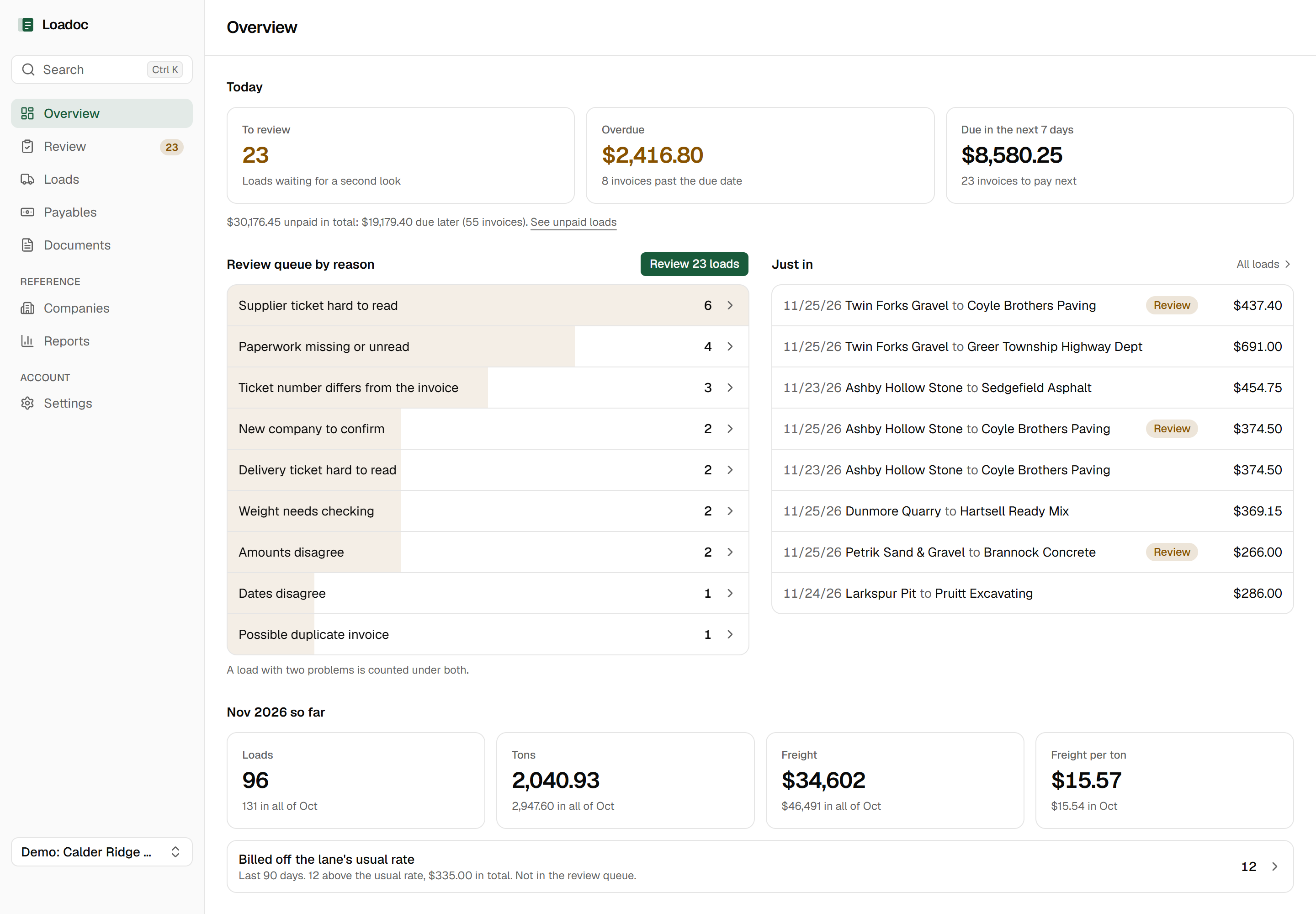
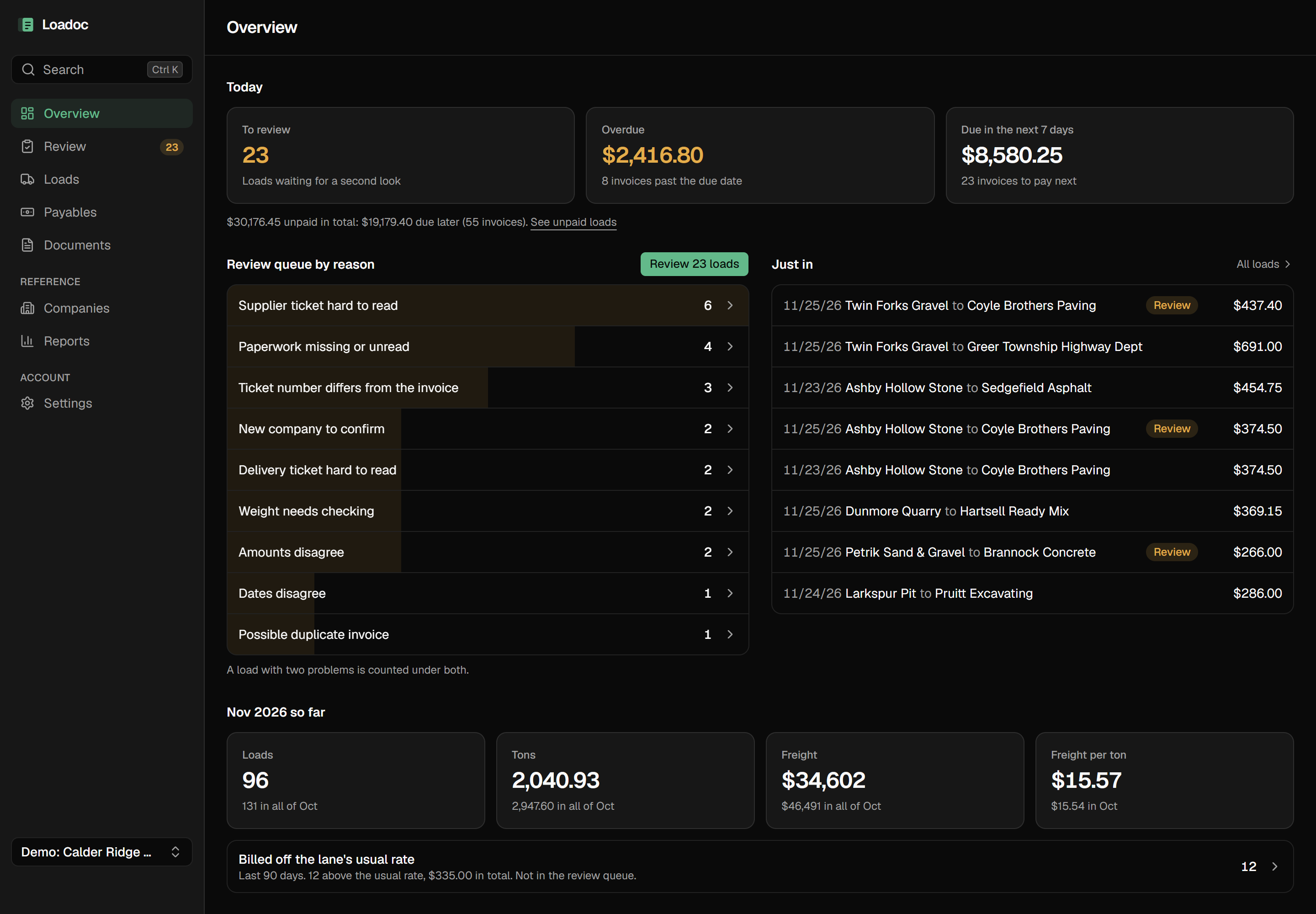
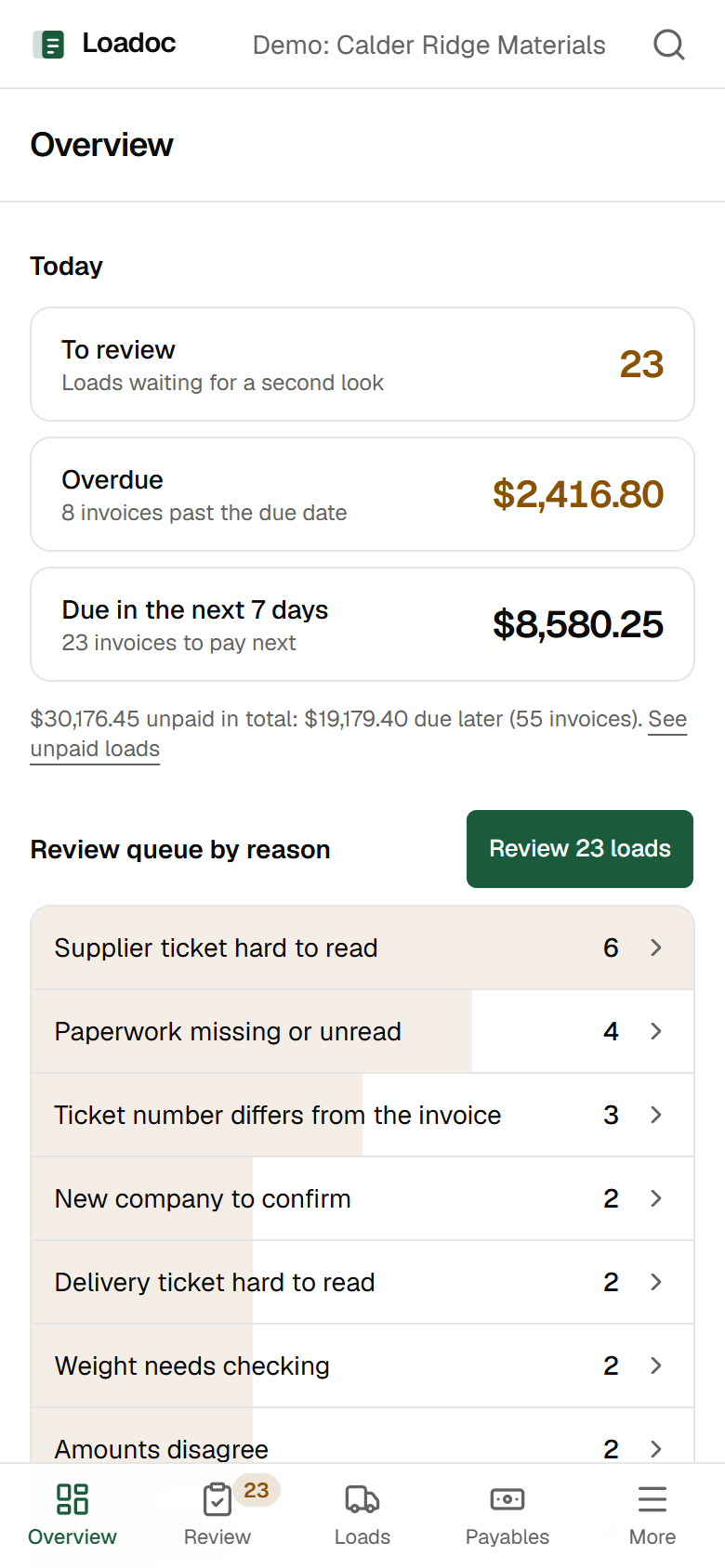
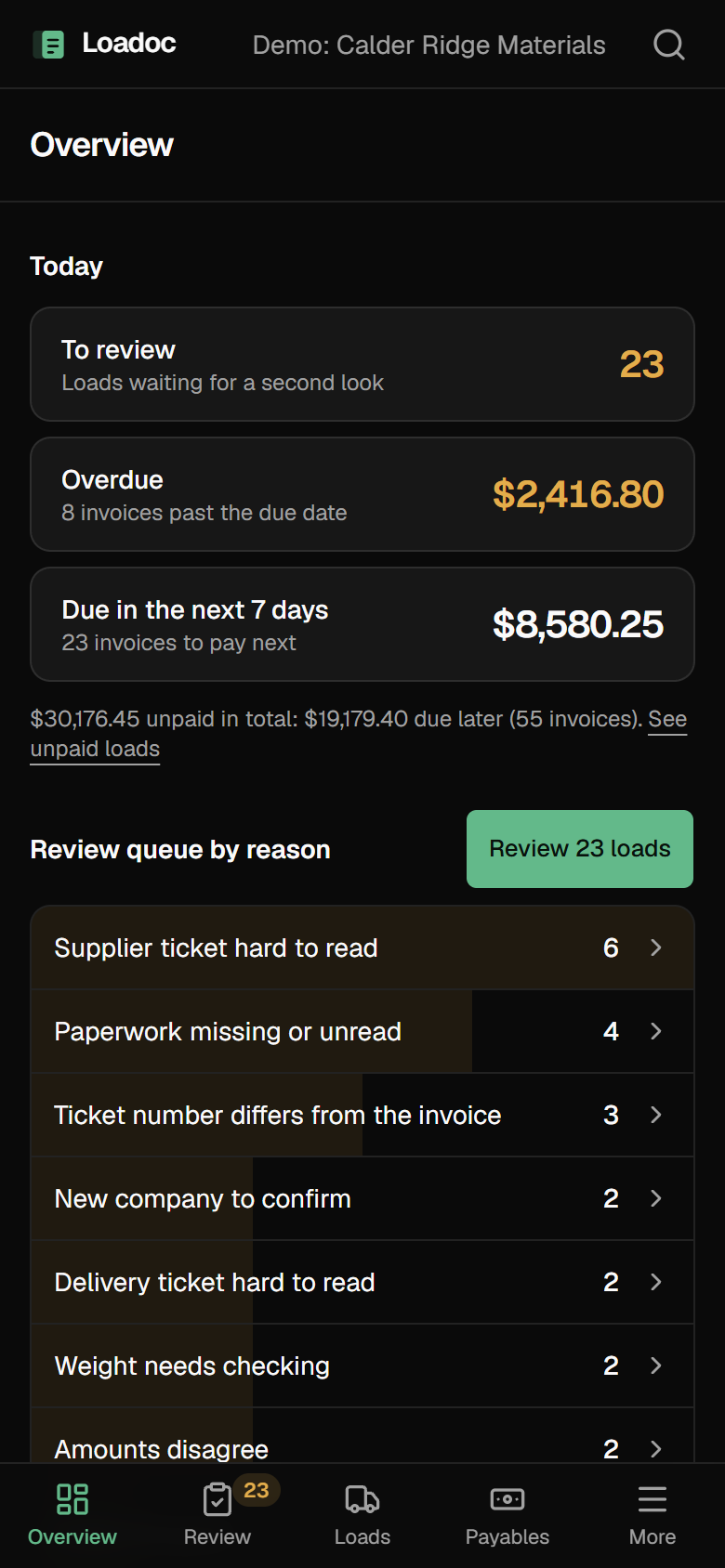
- No. Calder Ridge Materials is an invented aggregates broker, and every quarry, hauler and ticket in the sample account is made up. Loadoc's first customer hauls wood residuals. We do not yet have a paying customer in aggregates.
What it does
- Scale ticket reconciliationTicket numbers, gross, tare and net, and the supplier's weight against the delivered weight.
- Freight invoice auditCharges that do not add up, a rate above the confirmation, and invoices sent twice.
- Carrier payablesWhat you owe each hauler and when, the weekly payment, and the remittance that goes with it.
- Lane rates and freight costFreight per ton on every lane, and the day a hauler's rate moved.
Reconciling stone tickets against hauler invoices by hand today? The method is in how to reconcile scale tickets against a hauler's invoice. Not in aggregates? See who else Loadoc fits.
Run last month's freight bills through it
Connect the inbox your haulers bill, or drop in the PDFs you already have. The first batch shows which loads pass and which get set aside, and why.
14 days, up to 400 loads. Already have an account? Sign in