Wood residuals and biomass
Sawdust, shavings and wood chips: every hauling invoice checked against the mill ticket.
Loadoc was built with a company that moves residuals from sawmills to pellet and board plants. One person there keyed every hauler's invoice into a spreadsheet and compared the tickets by eye. More than 3,000 invoices later, about nine in ten go through with nobody touching them.
The paperwork
Two scales and a hauler in between
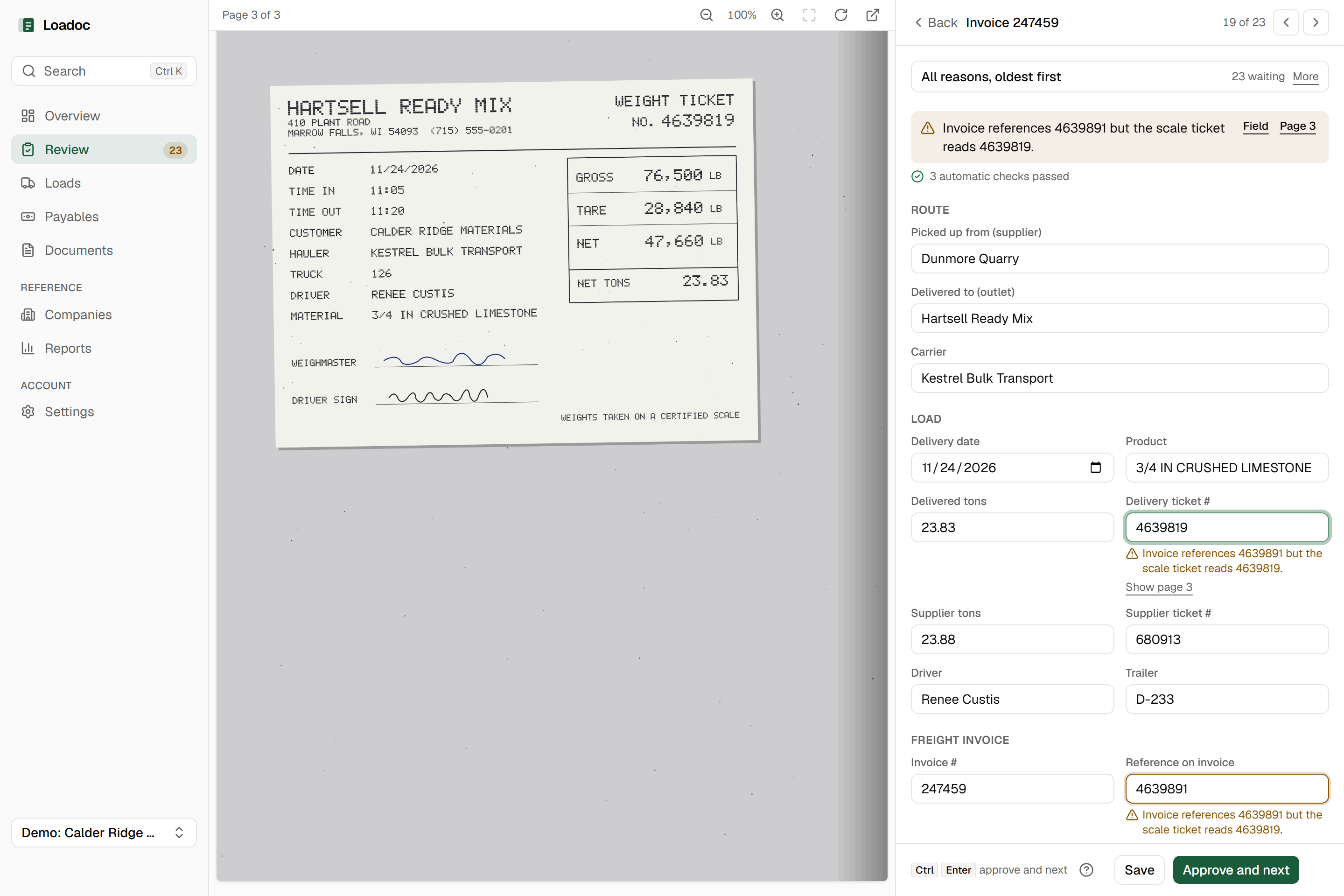
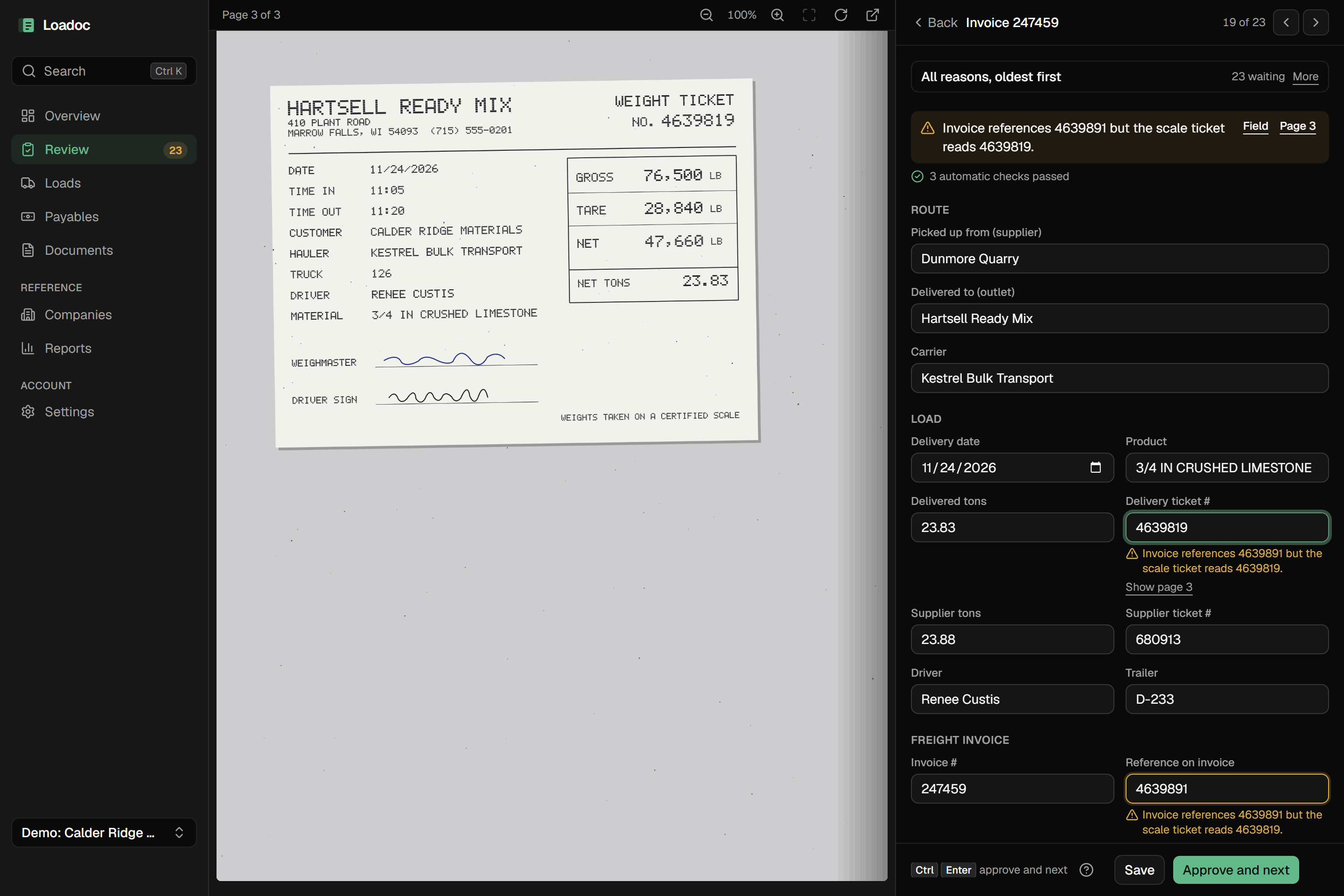
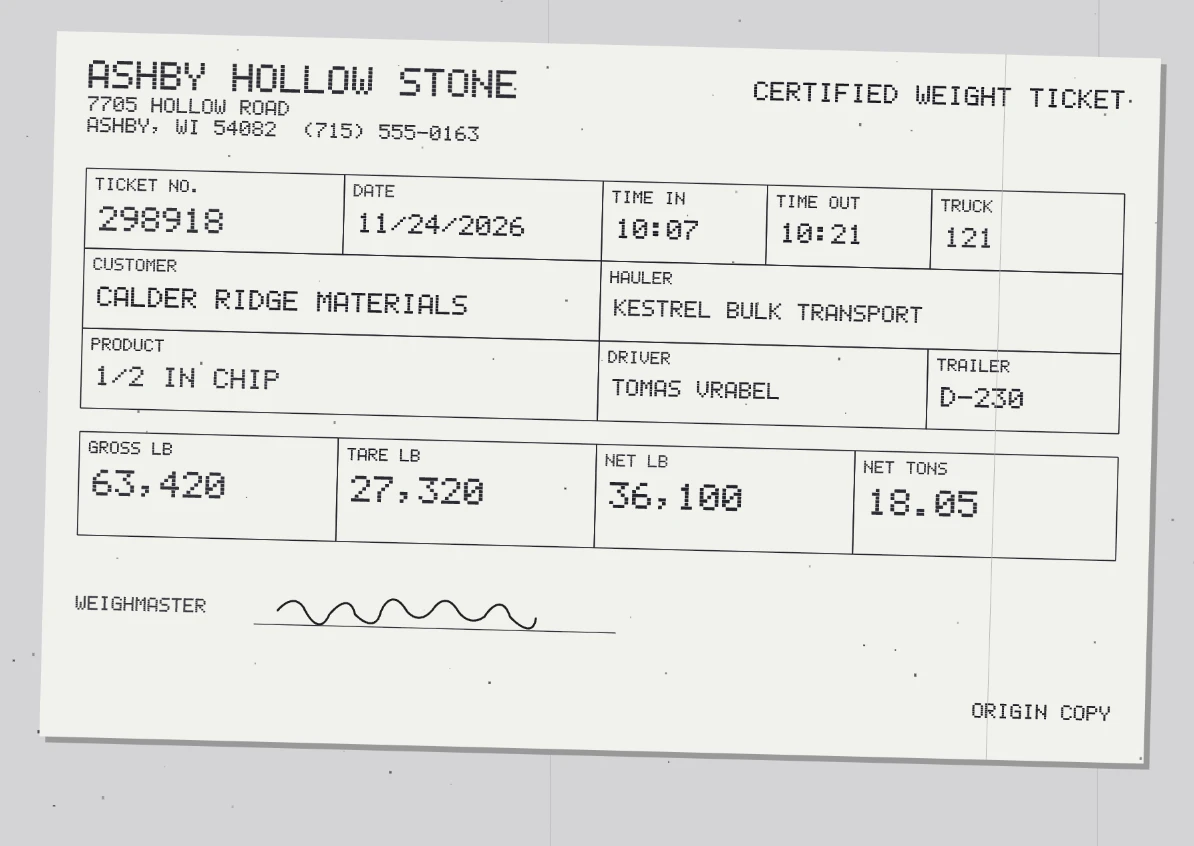
A load of chips or sawdust is weighed where it is loaded and again where it is dumped. The sawmill writes or prints a ticket. The plant's scale house prints another. The hauler staples both behind an invoice and emails the lot.
You pay the hauler, bill the plant and settle with the mill off those three pieces of paper, and they have to agree. Loadoc reads all three and tells you when they do not. Doing it by hand today? See how to reconcile scale tickets against a hauler's invoice.
Mill weight and delivered weight
Green material does not weigh the same twice
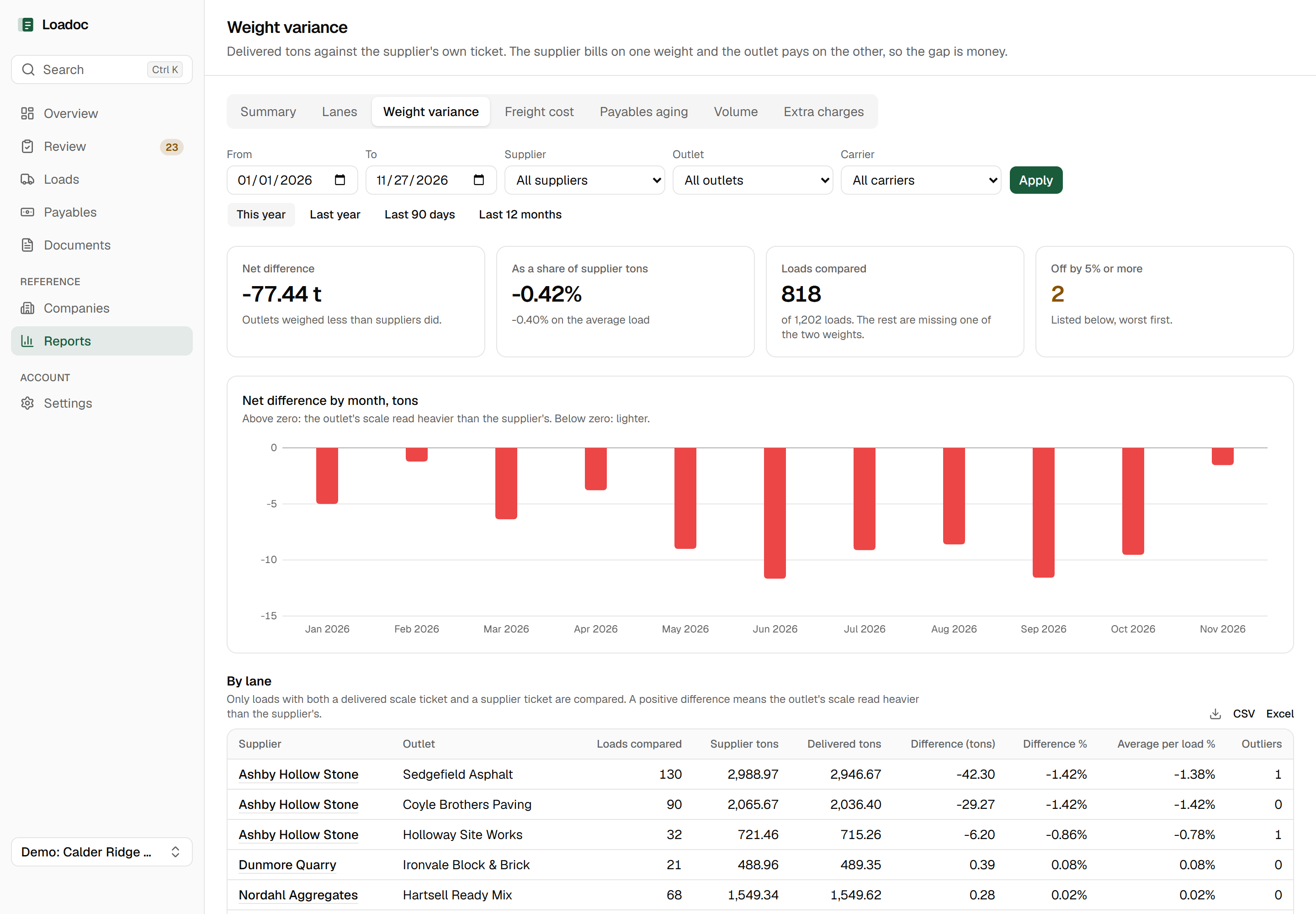
Residuals are sold wet. In one multi-year study of delivered wood chips, water content ran from under 30% in late summer to over 45% in winter. Add two scales, each allowed to be off by about 0.2%, and a tare that may be weeks old, and the mill's ticket and the plant's ticket will never match to the pound.
What matters is the pattern. Loadoc holds a single load when the two weights are far apart, and adds up the smaller differences by supplier, lane and month so a steady gap from one mill shows.
Haul rates
Paid by the ton, or by the load when it cubes out
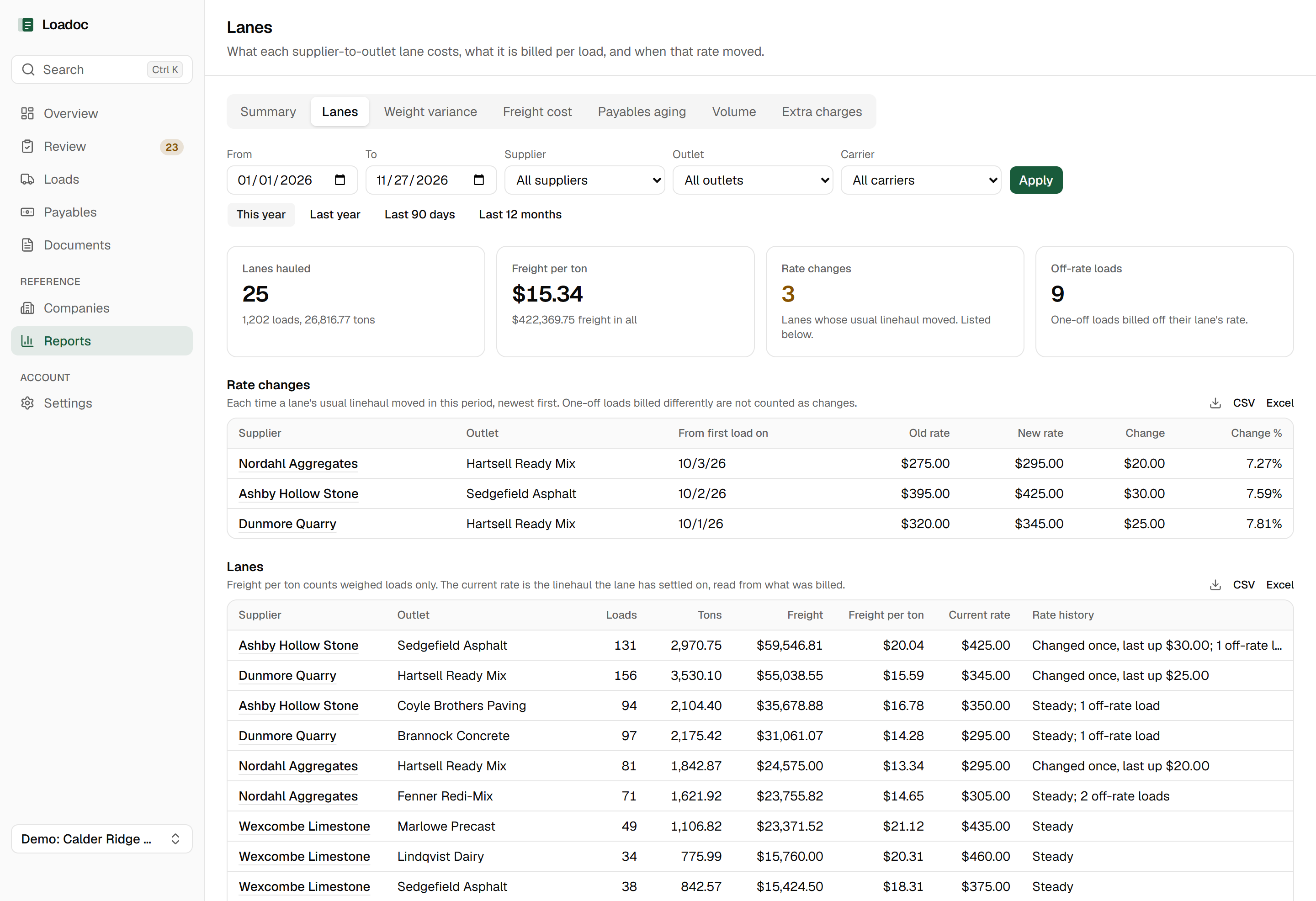
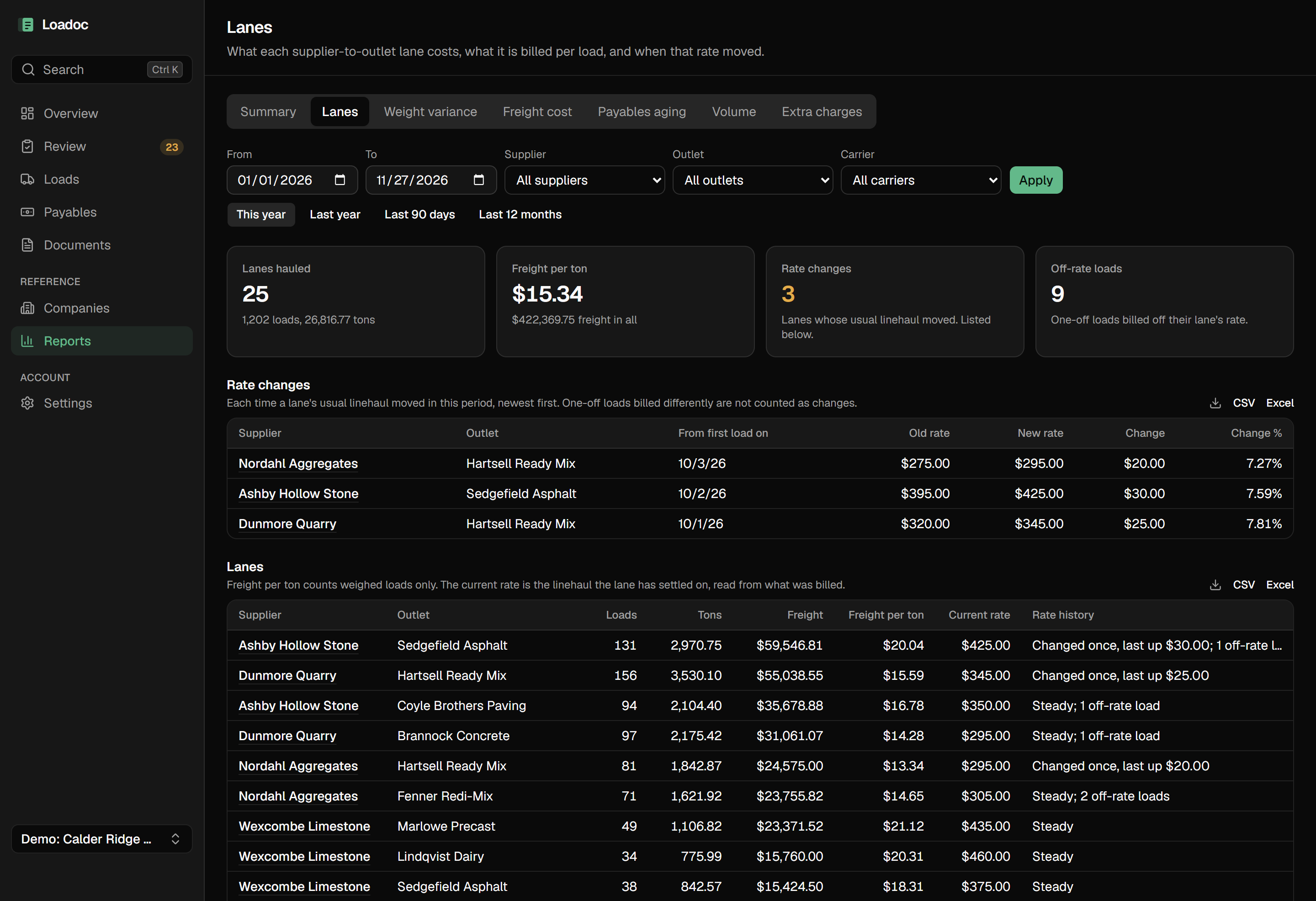
Chips and sawdust usually haul by the ton. Dry shavings fill the trailer before they reach the weight limit, so those lanes are often a flat rate per load. Loadoc reports freight per ton on both, and on a lane billed a steady amount it flags the invoice that comes in different.
Where it stops
No moisture and no bone dry tons. Weights are recorded as printed.
No log or stumpage accounting. Loadoc is for freight bills on residuals, not for settling with landowners or loggers.
Paper tickets. If a mill you deliver to has moved to electronic load tickets and the hauler no longer attaches a scan, there is no ticket in the PDF for Loadoc to read.
Questions
- Does it handle bone dry tons?
- No. Loadoc records the weights printed on the tickets, in pounds and tons, and compares them. It does not take a moisture reading or convert green tons to bone dry tons. If your sale is settled on a bone dry basis, that calculation stays where it is today.
- Our supplier's ticket is handwritten at the mill. Is that a problem?
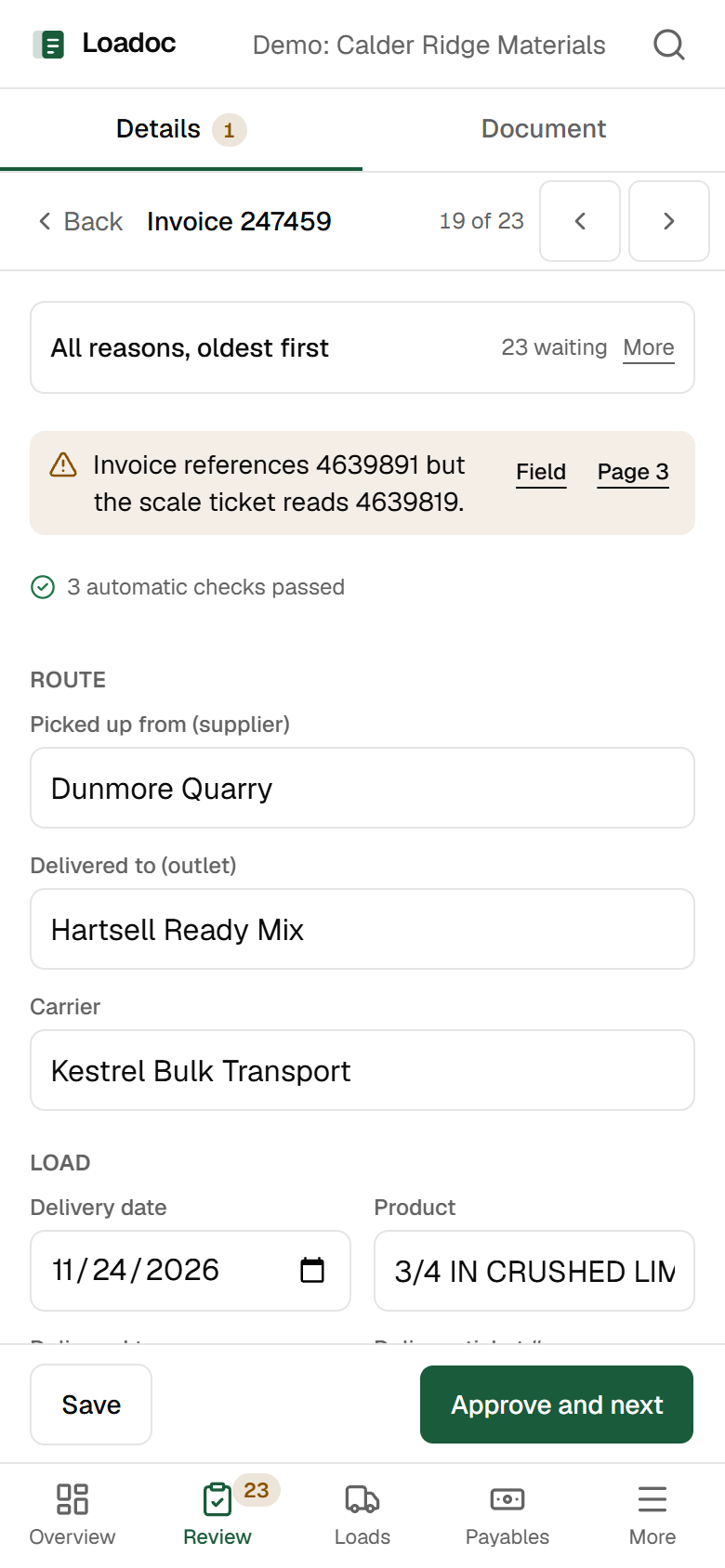
- Handwritten supplier tickets are read like any other scan. When one cannot be read with confidence, the load waits in review with the scan beside the supplier tons field, and a person types in what it says. In our sample account that is the most common reason a load is held.
- A lot of our loads are over 80,000 pounds gross. Will every one be flagged?
- No. A heavy load is not treated as an error. Weights are only flagged when they are far outside what a loaded truck can be, which usually means a digit was misread.
- Shavings cube out, so the hauler bills a flat rate per load. Does it still fit?
- Yes. A lane billed the same amount load after load is exactly where the lane rate check works: an invoice at a different figure is pointed out. The tickets are still read and compared, and freight per ton is still reported.
- Have you used it on anything other than residuals?
- Our first customer ships residuals, and that is where the 3,000 invoices were read. The sample account in the pictures is an invented aggregates broker, built to show every check. We have not run a paying customer's grain, scrap or salt paperwork through it.
What it does
- Scale ticket reconciliationTicket numbers, gross, tare and net, and the supplier's weight against the delivered weight.
- Freight invoice auditCharges that do not add up, a rate above the confirmation, and invoices sent twice.
- Carrier payablesWhat you owe each hauler and when, the weekly payment, and the remittance that goes with it.
- Lane rates and freight costFreight per ton on every lane, and the day a hauler's rate moved.
Not in residuals? See who else Loadoc fits, and who it does not.
Run last month's freight bills through it
Connect the inbox your haulers bill, or drop in the PDFs you already have. The first batch shows which loads pass and which get set aside, and why.
14 days, up to 400 loads. Already have an account? Sign in